Socioeconomic background
In Spring 2025, the Creative Diversity Network updated the Diamond survey to include questions about socioeconomic background. From this date, contributors whose previous survey had expired or who were new to Diamond completed the revised survey, which included questions about education and parental occupation. For programmes broadcast between 1 April 2025 and 31 March 2026, almost 180,000 programme contributions were linked to over 12,000 new diversity forms.
See here for defintions of Professional background: parental occupation
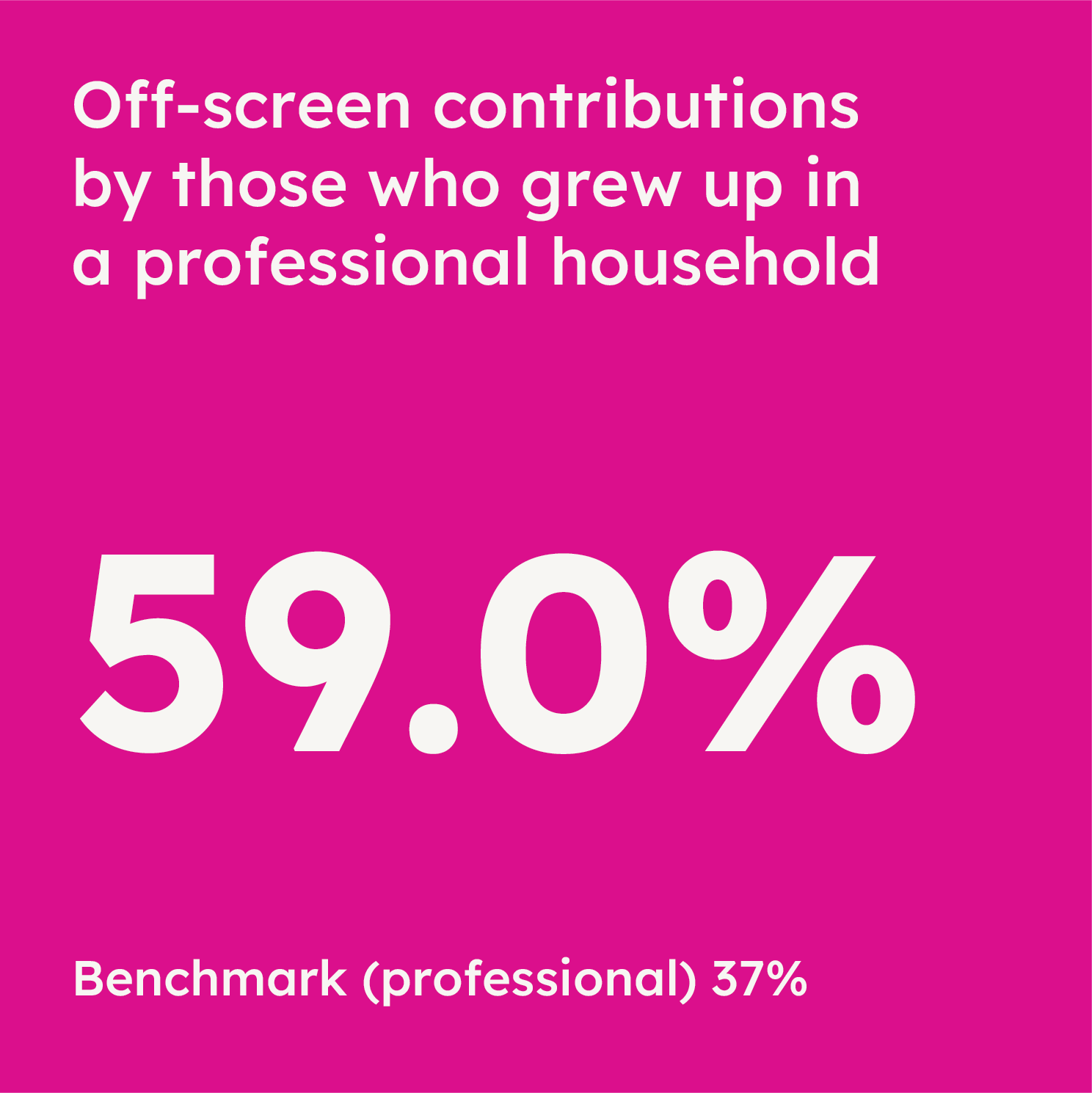
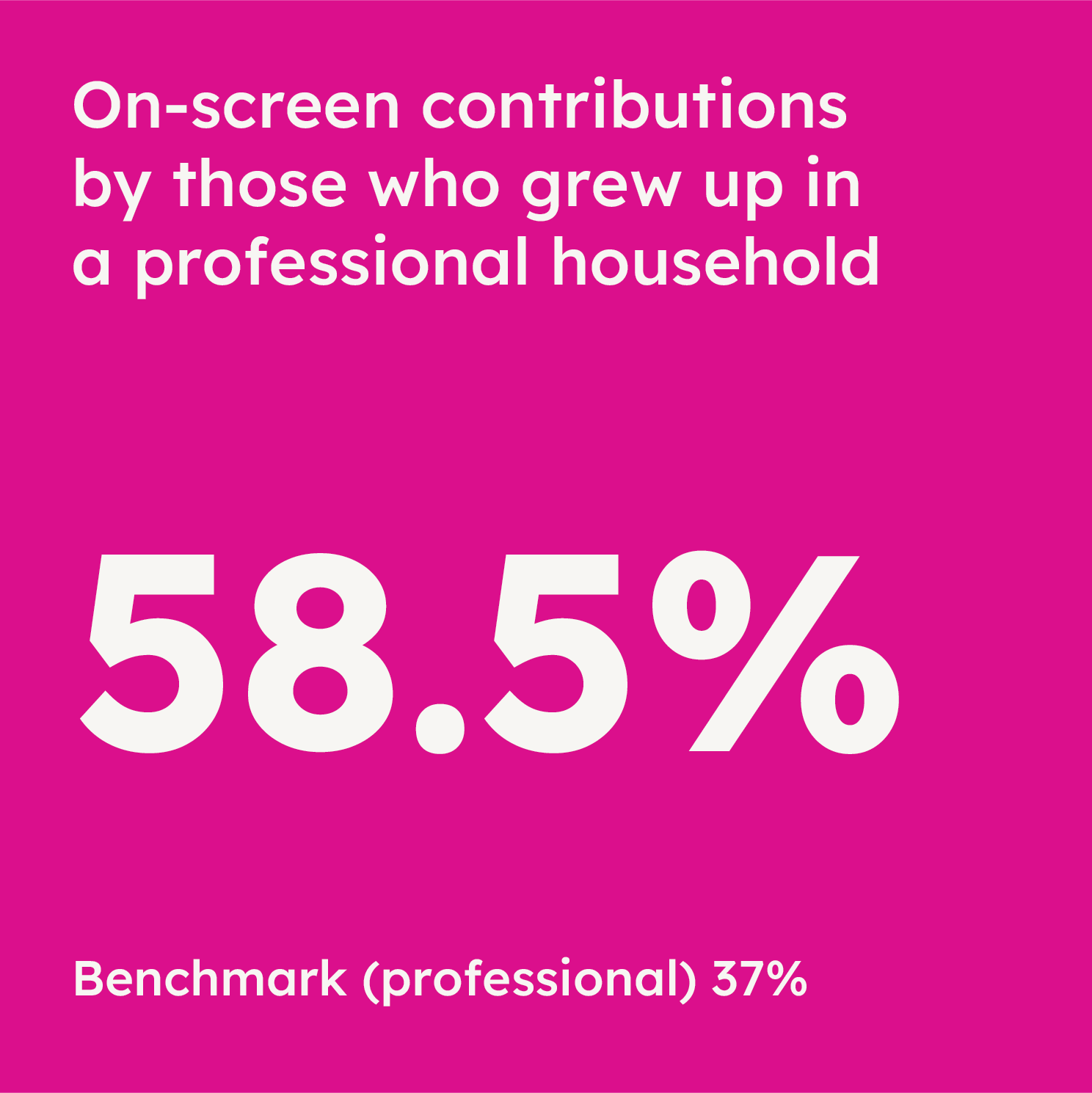
The TV production industry is dominated by people who grew up in a professional household. Both on and off-screen, almost 60% of programme contributions come from cast and crew who grew up in a professional household; this compares to 37% of people in the general working population who come from a similar household.
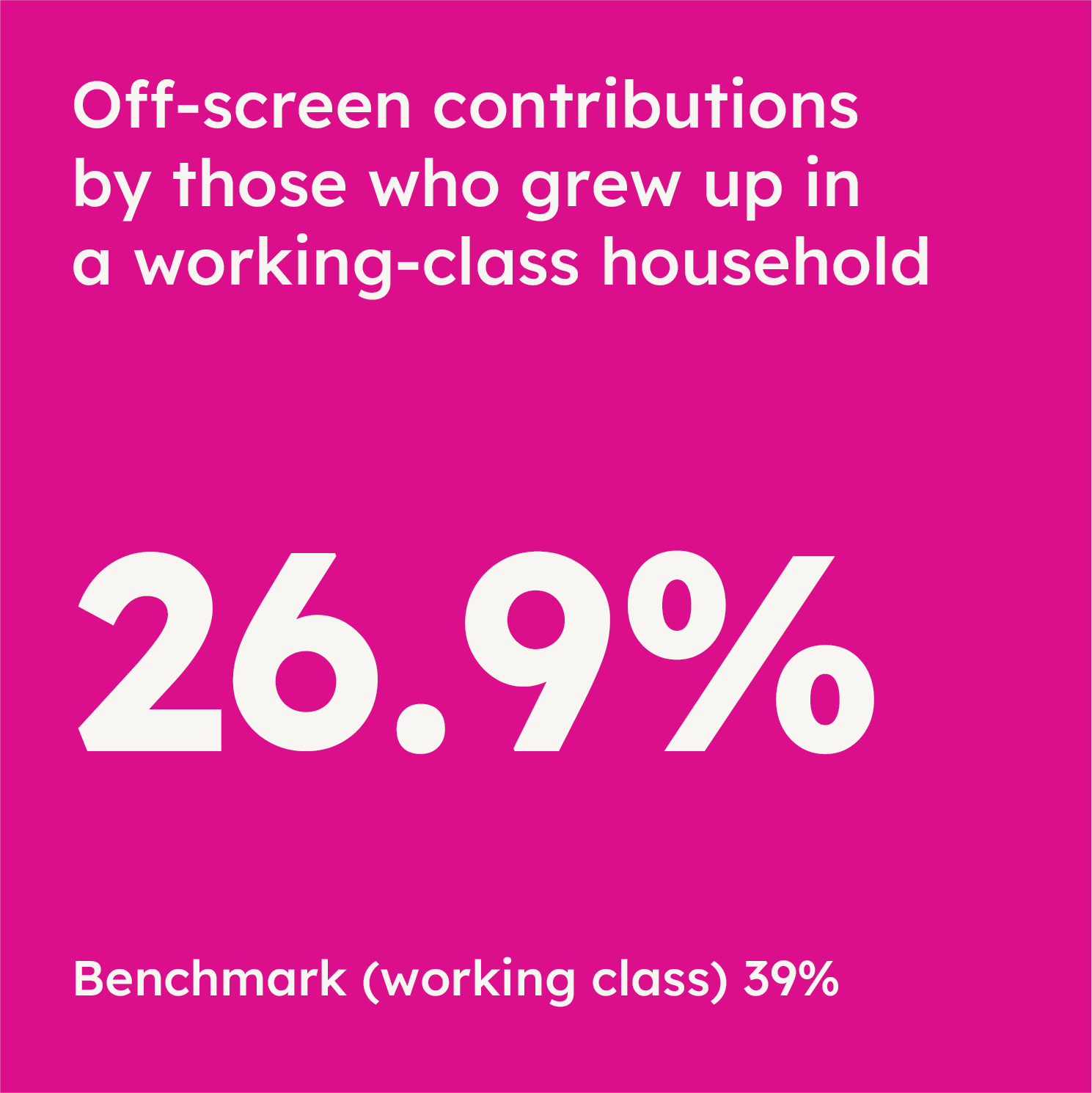
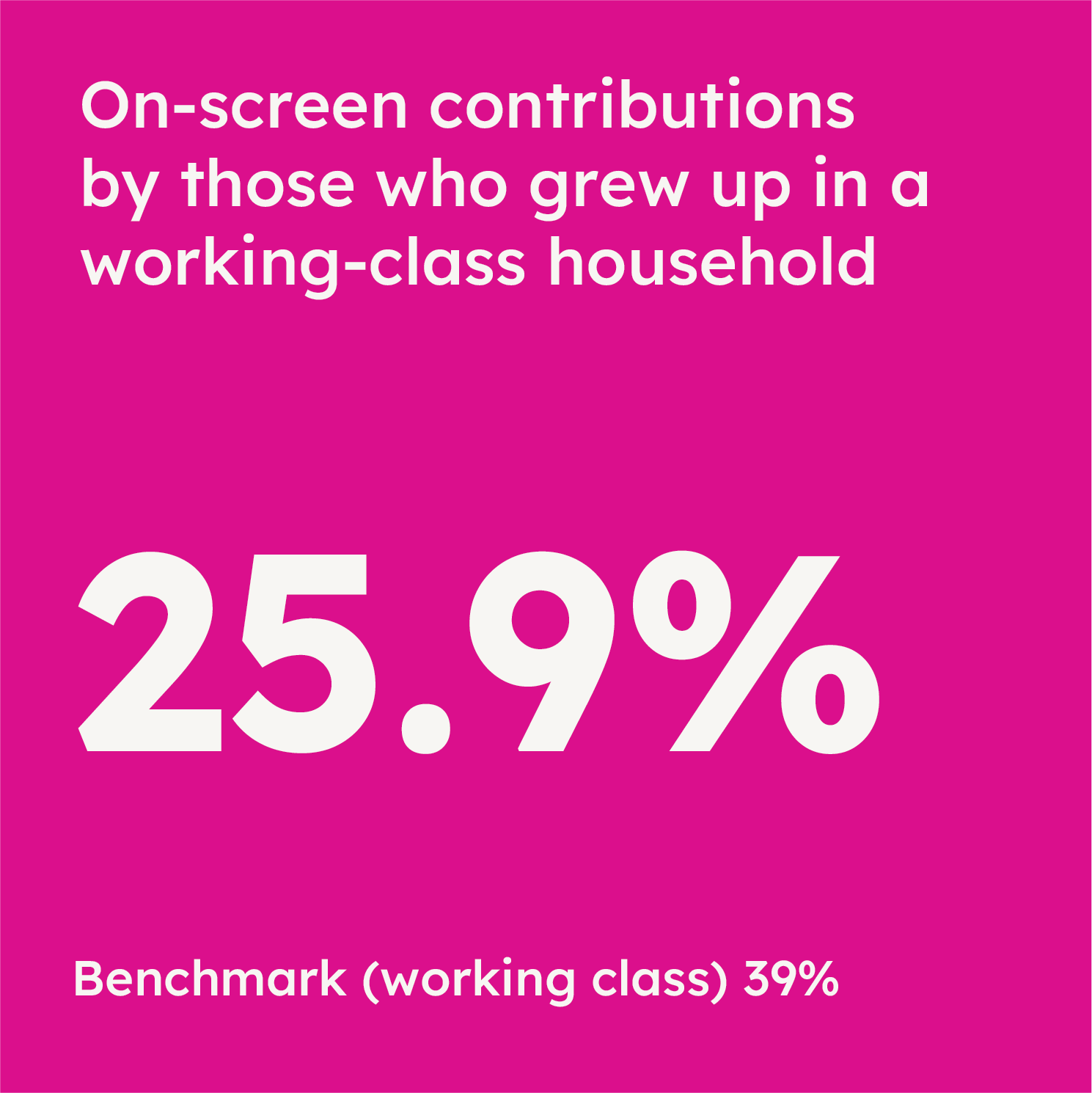
People from a working-class background make only around one quarter of programme contributions (27% off-screen; 26% on-screen), despite making up 39% of the national working population.
As an industry, relatively few contributions are being made by people from an intermediate background (14% off-screen and 16% on-screen compared to 24% nationally). This ‘missing middle’ perhaps accentuates the divide felt between the other two other groups as well as the overall dominance of the professional classes.
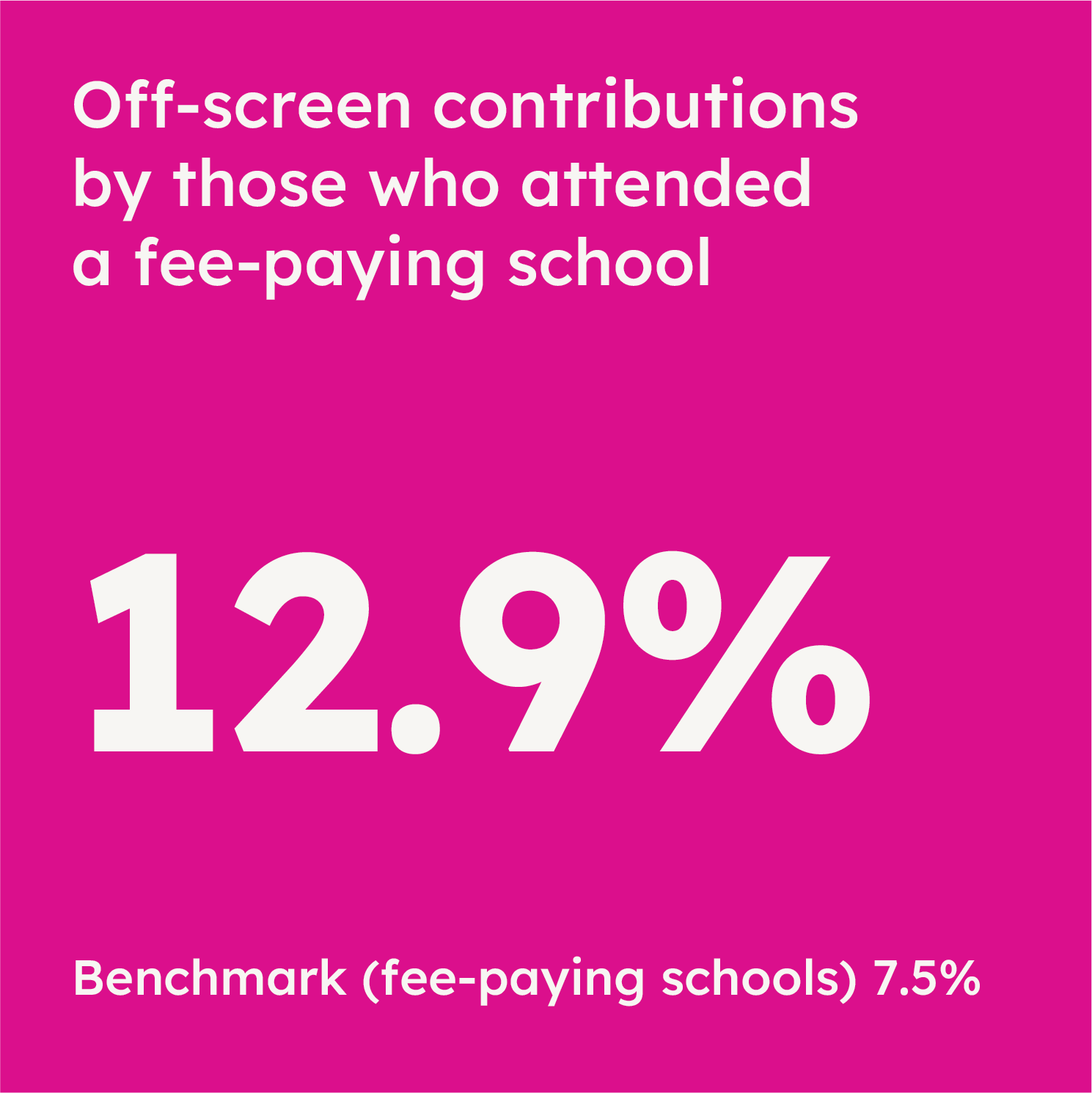
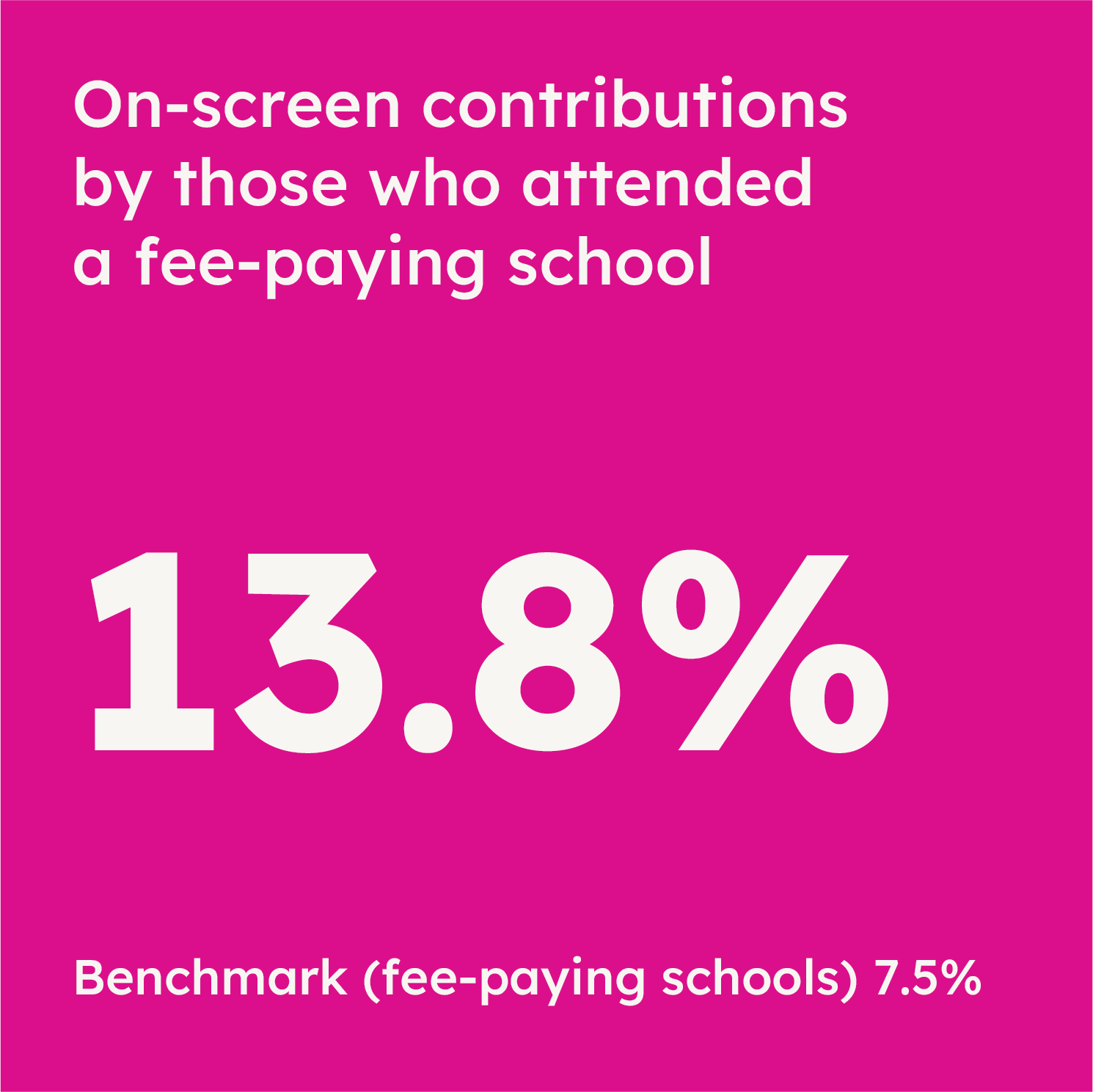
Across the industry, private school education is higher than the national average with 13% of off-screen contributions and 14% of on-screen contributions being made by people who attended a fee-paying school compared to the national average (7.5%).
Although senior and non-senior roles share a very similar profile when it comes to parental occupation, differences between these two groups are evident in terms of private education. 17% of off-screen senior role contributions were made by someone who was privately educated, compared to 11% of non-senior role contributions. This suggests that educational privilege may be more important than class privilege when it comes to getting on in the industry.
On-screen, Children’s programmes have the highest proportion of contributions coming from people who grew up in a professional household (67%) and also the highest rate of contributions from people who attended a private school (25%).